AI models that let any robot learn new tasks. Co-founded by Sergey Levine and backed by Jeff Bezos, CapitalG and OpenAI. Valued at a reported $11–11.5B in 2026, with talks at ~$20B (Oct 2026). Latest model π0.7; developer API in beta. Pre-revenue. Updated Oct 31, 2026. 8 pages.
The AI economy is the economy.
The full Physical Intelligence brief is free. Enter your name and email and we'll send your PDF in minutes.
No spam. Unsubscribe anytime.
By George Brust, President & CEO, Olympus Services · Published 31 Oct 2026
The Physical Intelligence brief below is the full Olympus research text, with every figure tagged to a numbered source. A formatted PDF of the same brief is free by email.
| Date | Event |
|---|---|
| Mar 2026 | Talks reported for ~$1B at more than $11B [S1][S2] |
| 16 Apr 2026 | π0.7 released: a "steerable" generalist robot model; paper on arXiv [S3][S4] |
| May 2026 | 2026 round reported at about $11–11.5B; not announced by the company [S5][S6] |
| 13 Oct 2026 | Pi API beta: developers can fine-tune Pi's models on their own robot data and run them hosted [S7][S8] |
| 27 Oct 2026 | Bloomberg: talks to raise at least $1B at about $20B, with Avenir and Lux in talks to lead [S9][S10] |
The May edition gave the 2024 valuation as $2 billion (reported at $2.4 billion), listed investors and executive titles we could not verify, carried outdated competitor valuations, and described the market in 'tens of trillions' without a source. Those items are corrected or removed. It also carried a scheduling link; Olympus contact is by email only.
Physical Intelligence, founded in San Francisco in 2024, builds general-purpose AI models that control robots. It does not make robots; its models are designed to run on other companies' hardware. [S9][S10] Its co-founders include CEO Karol Hausman, Sergey Levine and Chelsea Finn. [S11][S12]
The company has released a family of models, from π0 in October 2024 to π0.7 in April 2026, and open-sourced its early models. [S3][S4] In October 2026 it launched its first product, a developer API in beta. [S7][S8]
Investors have repriced it rapidly: $2.4 billion in November 2024, $5.6 billion in November 2025, a reported $11–11.5 billion in 2026, and talks at about $20 billion reported on 27 October. [S13][S14][S5][S9] It has no revenue. [S9][S10]
Rated III (Medium). The team and research are first-rate, and the API is a real first step toward a business. But the company is pre-revenue, its valuation would rise about eightfold in two years if the ~$20 billion round closes, and better-funded rivals are pursuing the same goal. Paying customers on the API would support an upgrade.
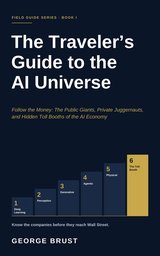
A world-class research lab, now testing whether it can become a business.From the author of this briefThis brief covers one company. Physical Intelligence sits in Stage 5, Physical AI — the machine gets a body. The Traveler's Guide to the AI Universe, Book I maps the whole AI economy around it, in plain language.Get Book I →
Olympus Services view
Physical Intelligence sells AI models that control robots; it does not make robots. Its early models are free to download through its open-source openpi project. Its newest models are offered through the Pi API, launched in beta on 13 October 2026: developers upload demonstrations from their own robots, fine-tune Pi's models on Physical Intelligence's computers, and run them through hosted inference. [S9][S10][S3][S7][S8][S15]
| Customer | Product or service | What they concretely get |
|---|---|---|
| Robotics companies in the API beta (e.g. Almond, Actor, Formic, Chef Robotics) | Pi API | Pi's latest models fine-tuned on their own robot demonstrations and run through hosted inference, without building their own training setup [S7][S8][S15] |
| Researchers and developers (open source) | openpi | Free model checkpoints (π0, π0-FAST, π0.5) and examples to train and run themselves [S3][S15] |
| AI chain layer | Physical Intelligence's role |
|---|---|
| Chips & hardware | Buyer; suppliers not disclosed |
| Compute & cloud | Runs fine-tuning and inference on compute it manages; suppliers not disclosed [S8][S15] |
| Data | Trains on robot data; API users upload their own demonstrations [S15][S8] |
| Foundation models | π0 to π0.7 robot models [S3][S4] |
| Developer tools | Pi API: fine-tuning and hosted inference [S7][S8][S15] |
| Applications | Built by customers (for example deburring parts, wheel-loader work) [S15][S8] |
| Physical AI | Does not make robots; its models run on others' hardware [S9][S10] |
| Round | Date | Amount | Valuation | Investors |
|---|---|---|---|---|
| Seed | 2024 | ~$70M | — | [S13] |
| Nov 2024 | Nov 2024 | $400M | $2.4B post-money | Jeff Bezos, OpenAI, Thrive, Lux, Bond [S13][S18] |
| Nov 2025 | Nov 2025 | ~$600M | $5.6B | Led by CapitalG; Lux, Thrive, Bezos returned; Index Ventures, T. Rowe Price new [S14][S11] |
| 2026 (reported) | May 2026 | ~$1B (reported) | ~$11–11.5B | Not announced by the company [S1][S5][S6] |
| Reported talks | Oct 2026 | ≥$1B | ~$20B | Avenir and Lux in talks to lead; not closed [S9][S10] |
No Form D has been found on SEC EDGAR for the 2026 round.
| Release | Date | What it does |
|---|---|---|
| π0 | Oct 2024 | First generalist robot model (company) [S3] |
| openpi | Feb 2025 | Early models open-sourced (company) [S3] |
| π0.5 | Apr 2025 | Generalization to new homes and settings (company) [S3] |
| π*0.6 | Nov 2025 | Learns from its own experience (reinforcement learning) [S3][S11] |
| π0.7 | Apr 2026 | Steerable generalist model [S3][S4] |
| Pi API (beta) | Oct 2026 | Fine-tuning and hosted inference for developers [S7][S8] |
Early API users named by the company include Almond, Chef Robotics and Formic (company-reported). [S7][S8]
CEO Karol Hausman, formerly of Google DeepMind. Co-founders include Sergey Levine (UC Berkeley), Chelsea Finn (Stanford), Lachy Groom, Brian Ichter, Adnan Esmail and Quan Vuong. [S11][S12]
| Company | Position |
|---|---|
| Skild AI | Robot foundation models; ~$1.4B led by SoftBank at >$14B (Jan 2026) [S16][S17] |
| Figure AI | Builds its own humanoid and AI (Helix); $39B post-money (Sep 2025) [S19][S20] |
| Google DeepMind, Nvidia, Tesla | Large companies with their own robot AI programs |
| Measure | Value | Basis |
|---|---|---|
| Last announced valuation | $5.6B (Nov 2025) | [S14][S11] |
| Reported 2026 valuation | ~$11–11.5B | [S5][S6] |
| Reported talks | ~$20B | [S9][S10] |
| Revenue | None | [S9][S10] |
No price targets or scenario values are given in this brief.
| Level | Risk | What to know |
|---|---|---|
| HIGH | No revenue | Pre-revenue; API pricing not disclosed [S9][S7] |
| HIGH | Valuation | ~$2.4B to ~$20B (talks) in under two years [S13][S9] |
| MEDIUM | Competition | Skild AI, Figure, large tech companies [S16][S17] |
| MEDIUM | Research to product | First commercial product is a beta [S7][S8] |
| Timing | Event |
|---|---|
| Q4 2026 | ~$20B round [S9] |
| 2026–27 | API pricing and first paying customers [S7] |
| Ongoing | Next model release after π0.7 [S3] |
Disclosures. Educational research, not investment advice; Olympus gives no buy or sell ratings or price targets. Conviction is on a I–V scale (I–II Low, III Medium, IV–V High). Olympus uses AI research tools, including Anthropic's Claude, to help gather and check sources; the analysis and rating are George Brust's. Physical Intelligence is a private company; figures come from company announcements, filings and press reports as cited.
Cite this brief: George Brust, “Physical Intelligence Intelligence Brief,” Olympus Services. https://olympusservices.net/briefs/physical-intelligence/ — Free to quote with a link to this page.
Each number is tagged to a numbered source — SEC filings, company releases and tier-one press — not recycled headlines.
What the company actually delivers, where it sits in its value chain, who pays — and what is not disclosed.
Where this company sits against incumbents and challengers — moats, risks, and the bear case stated plainly.
A decision-grade PDF you can put in front of an investment committee, client, or board.