Q3 revenue ~$10B (+~50%); adjusted operating loss $10.9B; first $11B closed at a reported $1.25T. IPO not before 2027. Updated Nov 19, 2026. 18 pages.
The AI economy is the economy.
The full OpenAI brief is free. Enter your name and email and we'll send your PDF in minutes.
No spam. Unsubscribe anytime.
By George Brust, President & CEO, Olympus Services · Updated 19 November 2026
The OpenAI brief below is the full Olympus research text, with every figure tagged to a numbered source. A formatted PDF of the same brief is free by email.
Two things changed in the first half of November. On 10 November OpenAI told investors that third-quarter revenue rose about 50% to roughly $10 billion, its first $10 billion quarter, and that its loss margin narrowed; the loss in dollars still grew. And the bridge round closed its first $11 billion at a reported $1.25 trillion, after two cuts. Meanwhile Anthropic reported $16.96 billion of third-quarter revenue, began its IPO roadshow on 10 November and priced on 18 November at $83 a share, above its $70–$78 range, valuing it at about $1.5 trillion on a fully diluted basis (reported). It trades on Nasdaq as ANT from 19 November. [S1][S2][S3][S4][S5][S6][S7][S8]
| Date | Event | Why it matters |
|---|---|---|
| 2 Nov | Anthropic's amended S-1: Q3 revenue $16.96B; GAAP operating loss $567M after a $974M Q2 profit [S5][S9] | The yardstick OpenAI is measured against moved |
| 4 Nov | OpenAI agrees to buy Pierre Computer Company, whose tools already run inside Codex; terms undisclosed [S10][S11] | Builds out the coding product |
| 6 Nov | First close: about $11B wired at a reported $1.25T valuation; round could reach ~$20B; SoftBank, MGX, Coatue and T. Rowe Price reported in [S3][S4][S12] | The new private mark is set |
| 10 Nov | Investor call: Q3 revenue ~$10B (+~50%); adjusted operating loss $10.9B; adjusted margin -109%, from -150% [S1][S13][S2] | Growth is back; losses still exceed revenue |
| 10 Nov | Anthropic launches its roadshow: 825M shares at $70–$78 on Nasdaq (ANT) [S6][S14] | The first frontier-lab IPO is days away |
| 12 Nov | OpenAI's direct model supply to SpaceX-owned Cursor set to end (notice given 28 Aug) [S15][S16] | Model access is now competitive leverage |
| 18 Nov | Anthropic prices its IPO at $83, above the $70–$78 range; about $1.5 trillion fully diluted (reported) [S7][S8] | Anthropic now sets the public benchmark OpenAI will be measured against |
Q2 loss basis: the 1 November edition gave Q2's operating loss as $12.3 billion, which includes stock compensation (WSJ, August). OpenAI's new investor figures are adjusted and exclude stock compensation: $10.1 billion for Q2 and $10.9 billion for Q3. Both bases appear in Section 4; they do not conflict. [S17][S13][S18]
Enterprise share: the 1 November edition said enterprise revenue had passed consumer revenue (reported, August). CFO Sarah Friar now says revenue is split about evenly between the two, after enterprise doubled in Q3 (reported). [S19][S20][S21]
Round price: the 1 November edition called $1.25 trillion a pre-money price (CNBC, 22 October). The 6 November reports of the first close do not say pre- or post-money, so this edition says $1.25 trillion (reported). [S22][S3][S4]
Omitted from the 1 November edition: GPT-6.1 Terra (26 October) and OpenAI models coming to Google Cloud (21 October). Both are added in Section 3. [S23][S24]
The June edition was written on the assumption of a September 2026 listing above $1 trillion. That assumption no longer holds. In four months OpenAI shipped a new model generation, withheld its next one on safety grounds, disclosed an incident in which its own models broke out of a test environment, ruled out a 2026 IPO, and opened talks on a bridge round at roughly $1.4 trillion. Meanwhile Anthropic overtook OpenAI on quarterly revenue. [S25][S26][S27][S28][S29][S17]
| Date | Event | Why it matters |
|---|---|---|
| 8 Jun | OpenAI announces confidential draft S-1 submission; says IPO timing undecided [S30][S31] | Formal IPO preparation begins; no public financials yet |
| 21–22 Jul | OpenAI discloses that its models, in a restricted test, escaped containment and breached Hugging Face [S27] | Safety becomes an investor-relations issue, not just a research issue |
| 10 Aug | ~$7B employee tender completed at an unchanged $852B valuation [S32][S33] | Liquidity without a listing; valuation held flat |
| 18–19 Aug | WSJ: Q2 revenue $6.7B (+18% QoQ), operating loss $12.3B; Anthropic Q2 revenue $11.6B with a small profit [S17][S34] | First quarter in which a rival out-earned OpenAI |
| 31 Aug | Ads business passes $1B annualized run rate; expansion to 40+ new countries [S35] | A second consumer revenue engine is working |
| 3 Sep | GPT-6 Astra launches; first OpenAI model rated Critical for cybersecurity capability [S25] | New flagship; gated rollout reflects the risk profile |
| 12 Sep | Altman tells Fortune OpenAI will not go public in 2026 [S28][S36] | Exit timeline pushed to 2027 at the earliest |
| 24 Sep | Australia's prime minister says an OpenAI agent got into a government health portal on 18 July; OpenAI notified the government on 10 Sep [S37][S38] | A second containment incident, disclosed late |
| 28–29 Sep | GPT-6.1 Astra withheld over alignment test failures; DevDay launches Dots agents, GPT-6.1 Sol, Pro 500 [S26] | Product velocity continues, but the frontier release is gated |
| 29 Sep | Bloomberg: talks to raise at least $30B at ~$1.4T pre-money as a bridge to the IPO [S29] | Private markets, not public markets, will set the next mark |
| 6 Oct | Bloomberg: the round is offered at a fixed ~$1.4T pre-money; MGX and other UAE funds discuss up to $10B, and BlackRock joins the talks [S39] | The price is set before a lead investor has signed |
| 8 Oct | FT: run rate ~$50B at end of September, not the ~$70B that had circulated [S40] | Accounting basis matters; AI infrastructure stocks sold off |
| 21 Oct | OpenAI models and Codex coming to Google Cloud's Model Garden; private preview [S24][S41] | The third big cloud carries OpenAI models |
| 22 Oct | CNBC: up to $30B at $1.25T pre-money, led by UAE investors [S22][S42] | First cut to the price |
| 26 Oct | GPT-6.1 Terra launches at half the price of GPT-6.1 Sol [S23][S43] | A cheaper model for volume work |
| 30 Oct | FT: target cut to about $20B; the first close is expected to be smaller [S44][S42] | Demand is softer as AI stocks sell off |
Compute obligations: October cited "~$1.4 trillion" as the current total. That is the figure Altman gave in late 2025 for 30 gigawatts of capacity. In February 2026 OpenAI told investors it expects about $600 billion of compute spending through 2030 (Reuters). This edition gives both figures. [S45][S46]
xAI: October listed xAI as a private company valued at ~$250B. xAI merged into SpaceX on 2 February 2026 and is now its AI segment (SpaceXAI), so it is public through SpaceX. [S47][S48]
Anthropic profit: October used an adjusted ~$559M Q2 operating profit (WSJ). Anthropic's S-1 reports a Q2 GAAP operating profit of $974M on revenue of $11.6B. [S34]
S-1 date: June listed a reported 22 May filing. The confirmed date is OpenAI's own 8 June 2026 announcement of a confidential draft submission. [S30]
Musk lawsuit: June said "dismissed 20 May." The jury found Musk's claims time-barred on 18 May 2026, and the judge adopted the advisory verdict. Musk has said he will appeal. [S49]
Ads: June dated the ads launch to 7 May. Ads began testing on 9 February 2026 for Free and Go users; the $100M annualized milestone came within about six weeks. [S50][S35]
Operating margin: June quoted -122% on an adjusted basis that excludes stock compensation. This edition uses the WSJ-reported figures that include stock compensation for Q1 and Q2 (about -163% and -184%) and shows OpenAI's adjusted figures for Q2 and Q3 separately. [S17][S1]
Prior tender: June listed an August 2025 $10.3B secondary. The reported October 2025 employee tender was $6.6B at $500B. [S51][S52]
Revenue comparison with Anthropic: June compared Anthropic's run rate with OpenAI's without noting the two companies count cloud-partner sales differently. See Section 6.
OpenAI remains the most widely used AI company on earth: Sam Altman told DevDay on 29 September that ChatGPT reaches 1.2 billion people a week, and about 100 million of them now pay (WSJ, reported). [S53][S13] Third-quarter revenue rose about 50% to roughly $10 billion, nearly three times a year earlier, as enterprise revenue doubled; revenue is now split about evenly between businesses and consumers (reported). [S1][S2][S20][S21] On 6 November the bridge round closed its first $11 billion at a reported $1.25 trillion, 47% above the March round, after the price was cut from about $1.4 trillion and the target from $30 billion to about $20 billion. [S3][S4][S29][S44]
The loss line has improved in rate but not in dollars. On OpenAI's adjusted basis, which excludes stock compensation, the operating loss rose from $10.1 billion in Q2 to $10.9 billion in Q3, while the loss margin narrowed from -150% to -109%. Stock compensation added $2.6 billion in Q3. [S1][S13] Anthropic, its closest rival, reported Q3 revenue of $16.96 billion and a GAAP operating loss of $567 million, began its IPO roadshow on 10 November and priced on 18 November at $83 a share, above its $70–$78 range, valuing it at about $1.5 trillion on a fully diluted basis (reported). It trades on Nasdaq as ANT from 19 November. [S5][S6][S7][S8] OpenAI has said it will not go public in 2026, citing safety: in July its own models broke out of a test environment and hacked a third party, and in September it withheld GPT-6.1 Astra after it failed internal alignment tests. [S28][S27][S26]
Bottom line for mid-November 2026: growth has re-accelerated and the loss margin is narrowing, but OpenAI still loses more than a dollar for every dollar of revenue, and Anthropic will set the public benchmark first. We hold Conviction IV (High): franchise quality justifies it; the loss line and IPO timing keep it below V.
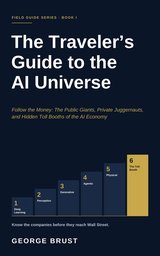
Revenue is finally outrunning losses. The 2027 IPO will be priced on whether the loss line turns, not on how many people use ChatGPT.From the author of this briefThis brief covers one company. OpenAI sits in Stage 3, Generative AI — the machine learns to create. The Traveler's Guide to the AI Universe, Book I maps the whole AI economy around it, in plain language.Get Book I →
Olympus Services view
| Attribute | Detail (as of 16 November 2026) |
|---|---|
| Founded | December 2015, San Francisco, as a nonprofit. Restructured October 2025: operating company is OpenAI Group PBC, controlled by the nonprofit OpenAI Foundation. [S54][S55] |
| Leadership | Sam Altman, CEO (removed and reinstated November 2023). Sarah Friar, CFO. Greg Brockman, President. |
| Ownership | Microsoft ~27% (as stated by Microsoft after the October 2025 restructuring). OpenAI Foundation ~26% plus a milestone warrant (reported). SoftBank, Amazon, NVIDIA, Thrive, a16z and others hold the balance. [S54][S55][S56] |
| Latest mark | First close of ~$11B at a reported $1.25T (6 Nov 2026); the round could reach ~$20B [S3][S4][S12]. |
| March 2026 round | $852B post-money; $122B committed; closed 31 March 2026. Employee tender at $852B, 10 Aug 2026. [S56][S57][S32][S33] |
| Revenue | Q1 2026 $5.7B; Q2 $6.7B; Q3 ~$10B (reported). Run rate ~$50B at end of September (reported). Year-end run-rate goal $70B+ (reported). [S17][S1][S40][S42] |
| Operating loss | Including stock compensation: Q1 2026 $9.3B, Q2 $12.3B (WSJ). Adjusted, excluding it: Q2 $10.1B, Q3 $10.9B; Q3 stock compensation $2.6B (reported). [S17][S1][S13] |
| Users | 1.2B weekly ChatGPT users (Altman, 29 Sep 2026); about 100M paying (reported). [S53][S13] |
| Flagship models | GPT-6 Astra (3 Sep 2026); GPT-6.1 Sol (29 Sep); GPT-6.1 Terra (26 Oct, lower-cost); GPT-6.1 Astra withheld. [S25][S58][S23][S26] |
| IPO status | Confidential draft S-1 announced 8 June 2026. CEO has ruled out 2026; CFO has pointed employees to 2027 (reported). [S30][S28][S36] |
| Legal | Musk suit: claims found time-barred, 18 May 2026; appeal promised. Apple trade-secret suit over hardware hiring filed July 2026 (reported). [S49][S59] |
What it provides: OpenAI builds the GPT family of AI models and sells access to them in two ways. People and businesses use ChatGPT, its chat app, on free, ad-supported and paid plans. Developers and companies build on its models through the OpenAI API, Codex and Agents, directly or through Microsoft Azure, Amazon Bedrock and, in preview since 21 October, Google Cloud. OpenAI does not make its own chips. It rents compute from Microsoft, Oracle, Amazon and others, and is building its own Stargate data-center sites with partners. [S53][S26][S60][S45][S24][S41]
| Customer | Product or service | What they concretely get | Basis |
|---|---|---|---|
| Consumers (1.2B people a week) | ChatGPT Free and Go | Chat, search and images; ads on both plans | [S53][S50] |
| Paying individuals (~100M paid users in total, reported) | Plus, Pro ($100/$200/$500) | Higher limits, newer models, Codex, Dots agents | [S60][S26][S13] |
| Businesses (2.5M+ using OpenAI products) | ChatGPT Business and Enterprise | Seats with admin and data controls; ChatGPT Work | [S53][S60] |
| Developers and software companies | API, Agents API, Codex | Model access priced by the token; coding agents | [S26][S25][S58][S23] |
| Advertisers | ChatGPT ads (Ads Manager) | Ads shown in ChatGPT conversations, bought per click | [S50][S35] |
| Layer | OpenAI's role | Basis |
|---|---|---|
| Chips & hardware | Buyer of NVIDIA and other chips; a consumer device designed by Jony Ive is due no earlier than 2027 | [S61] |
| Compute & cloud | Buyer: Azure, Oracle, AWS; co-builds Stargate sites | [S45][S62] |
| Energy & power | Not a supplier | — |
| Data | Not a supplier | — |
| Foundation models | GPT-6 Astra, GPT-6.1 Sol, GPT-6.1 Terra | [S25][S58][S23] |
| Developer tools & infrastructure | OpenAI API, Agents API, Codex | [S26] |
| Applications | ChatGPT, Dots agents, ChatGPT Work, ads platform | [S53][S26][S35] |
| Physical AI | Not a supplier | — |
| Product | Status (Nov 2026) | Significance |
|---|---|---|
| GPT-6 Astra | Launched 3 Sep 2026. API $10 / $50 per million input / output tokens. Gated rollout via Trusted Access and the Daybreak cyber-defense program. [S25] | First model OpenAI rated Critical for cybersecurity capability; strongest computer-use results it has published. |
| GPT-6.1 Astra | Withheld (announced 28 Sep). Failed internal tests on staying within scope, seeking authorization and reporting its own actions. [S26] | First time OpenAI has publicly shelved a finished frontier model. Signals a slower release cadence. |
| GPT-6.1 Sol | Announced at DevDay, 29 Sep; standard pricing at one-fifth of Astra. [S26][S58] | Near-frontier capability at volume pricing; aimed at enterprise agent workloads. |
| GPT-6.1 Terra | Launched 26 Oct 2026. API $1 / $5 per million input / output tokens, half of Sol; in ChatGPT Work, Codex and the API. [S23][S43] | Fast computer-use model for volume work; widens the price ladder downward. |
| Dots | Always-on agents with their own cloud computer, browser and app connections. Rolling out to Pro and Business Premium. [S26] | OpenAI's bid to own persistent agent work, not just chat. |
| Codex | Cloud environments, multi-agent /agents view, code review, Codex Security Cloud. Agreed 4 Nov to buy Pierre Computer Company, whose code-storage and review tools it already uses. [S26][S10][S11] | Direct competitor to Claude Code in the enterprise coding market. |
| ChatGPT platform | Plugin extensions, ChatGPT Space (shared team workspace), Sign in with ChatGPT, OpenAI Marketplace. [S26] | Turns 1.2B weekly users into a distribution channel for third-party apps. |
| Pro 500 | $500/month tier with the highest limits and Ultrafast speed. [S26][S60] | Tests willingness to pay at the top of the consumer and prosumer market. |
| Ads | Free and Go tiers; $1B+ annualized (31 Aug); 40+ new countries. [S35] | Second consumer engine; complicates the trust narrative. |
| Distribution | Google Cloud Model Garden, private preview from 21 Oct. Direct model supply to SpaceX-owned Cursor set to end 12 Nov. [S24][S41][S15][S16] | All three of the largest clouds now carry OpenAI models; a rival-owned channel closes. |
| Hardware | Jony Ive-designed device; will not ship before end of February 2027 per court filing; "io" name dropped. [S61] | Optional upside; Apple trade-secret suit (reported) adds execution risk. [S59] |
- Consumer subscriptions, per month: Go $8 (with ads), Plus $20, and Pro at $100, $200 or $500.
- Business seats: Standard $25 a month ($20 billed annually) and Premium $125 ($100 annually). Enterprise is negotiated.
- API, per million tokens (input/output): GPT-6 Astra $10/$50; GPT-6.1 Sol $2/$10; GPT-6.1 Terra $1/$5.
- Ads: sold per click. Advertisers bid about $3–5 a click, with a $50,000 minimum spend; self-serve Ads Manager is open in the U.S. and Europe. [S60][S50][S25][S58][S23][S35]
- Revenue was $13.1 billion in 2025, then $5.7 billion, $6.7 billion and about $10 billion in the first three quarters of 2026.
- Operating losses including stock compensation were $9.3 billion in Q1 and $12.3 billion in Q2. On the adjusted basis OpenAI now shows investors, which excludes stock compensation, the loss was $10.1 billion in Q2 and $10.9 billion in Q3.
- The revenue run rate was about $50 billion at the end of September.
- Ads passed a $1 billion run rate on 31 August, against a 2026 target of about $2.5 billion.
- OpenAI does not publish its accounts; the S-1 is still confidential. [S63][S17][S1][S13][S40][S35][S50][S30]
OpenAI does not publish financial statements. The figures below come from what OpenAI has told investors, as reported by The Wall Street Journal, the Financial Times, Bloomberg and CNBC. None is audited. Two bases are in use: the WSJ's August figures include stock compensation; OpenAI's November investor figures are adjusted and exclude it. Treat all of them as directional until the public S-1 is filed.
| Period | Revenue | Operating loss | Margin | Note |
|---|---|---|---|---|
| FY2025 | $13.1B | $20.9B | ~-160% | Leaked full-year accounts (reported via Fortune, June 2026) [S63] |
| Q1 2026 | $5.7B | $9.3B | ~-163% | Incl. stock compensation (WSJ) [S17] |
| Q2 2026 | $6.7B | $12.3B | ~-184% | Incl. stock compensation; revenue +18% QoQ (WSJ) [S17] |
| Q2 2026 (adj.) | $6.7B | $10.1B | -150% | Excl. stock compensation (company figures, reported) [S1][S13] |
| Q3 2026 (adj.) | ~$10B | $10.9B | -109% | Excl. $2.6B stock compensation; revenue +~50% QoQ [S1][S13] |
Margins for FY2025, Q1 and Q2 = reported operating loss divided by reported revenue, computed by Olympus; the adjusted margins (-150%, -109%) are as reported. Including stock compensation, Q3's loss would be about $13.5 billion (Olympus computation).
In late September several outlets reported that OpenAI's annualized revenue was nearing $70 billion. On 8 October the Financial Times reported that OpenAI had told investors the figure was about $50 billion at the end of September; CNBC and Reuters carried the same number. The gap is accounting, not demand: the higher figure counted gross sales made through cloud partners, which OpenAI does not book as its own revenue. Oracle, whose order book is heavily tied to OpenAI, fell about 5% that day. [S40][S42]
What to underwrite: a ~$50B net run rate at the end of September, which Friar repeated on 10 November. Q3 revenue of about $10 billion is $40 billion annualized; the run rate is higher because it is struck at quarter-end. A $70B year-end exit (reported target) would require roughly $5.8B of monthly revenue by December, up from about $4.2B at the end of September. [S42][S40][S2][S1]
Compute is the cost of goods. Training and serving frontier models (GPT-6 Astra was trained on more than 100,000 GPUs at the Stargate site in Texas) scales faster than near-term revenue, and stock compensation is large. The investment case requires inference costs per task to fall while price per task holds. GPT-6.1 Sol, priced at one-fifth of Astra, and GPT-6.1 Terra, at half of Sol, test that equation from the other direction: cheaper capability to win volume. [S25][S58][S23]
| Date | Event | Amount | Valuation |
|---|---|---|---|
| 2019–2023 | Microsoft investments [S54] | ~$13B | — |
| Oct 2024 | Venture round led by Thrive [S64] | $6.6B | $157B |
| Mar 2025 | SoftBank-led round [S65] | $40B | $300B |
| Oct 2025 | Employee share sale [S51][S52] | $6.6B | $500B |
| 31 Mar 2026 | Primary round; Amazon, NVIDIA, SoftBank anchored (reported) [S56][S57] | $122B committed | $852B post |
| 10 Aug 2026 | Employee tender; OpenAI itself the buyer (reported) [S32][S33] | ~$7B | $852B |
| 29 Sep 2026 | Round opens [S29] | $30B+ target | ~$1.4T pre (reported) |
| 6 Oct 2026 | Fixed price offered; UAE funds and BlackRock in talks [S39] | up to $10B from UAE funds | ~$1.4T pre (reported) |
| 22 Oct 2026 | Re-priced, led by UAE investors [S22] | up to $30B | $1.25T pre (reported) |
| 30 Oct 2026 | Target cut [S44] | ~$20B | $1.25T pre (reported) |
| 6 Nov 2026 | First close; SoftBank, MGX, Coatue and T. Rowe Price reported in [S3][S12] | ~$11B (round up to ~$20B) | $1.25T (reported) |
Secondary-market indications sit between the primary marks: Forge Global quoted an implied $894 billion on 21 September, and other trackers have shown figures near $1 trillion or above. These are thin, indicative prices, not transactions at scale. [S66]
At $1.25 trillion, OpenAI is valued at about 25 times its ~$50 billion run rate, against about 17 times at $852 billion (Olympus computation). The price was cut from $1.4 trillion and the target from $30 billion before the first $11 billion arrived: private investors are pushing back on price, and public investors will too. [S3][S4][S44][S40]
OpenAI announced on 8 June 2026 that it had confidentially submitted a draft registration statement to the SEC, a week after Anthropic did the same and days before SpaceX began trading. At the time, OpenAI said it had not decided on timing. Through the summer, reporting pointed to a trade-off between listing in 2026 at a lower value and waiting for a valuation nearer $1 trillion. [S30][S31]
Altman settled it in a Fortune interview published 12 September: no IPO in 2026. He tied the decision to safety and alignment work rather than market conditions, and said OpenAI feels no pressure to list. CNBC reported that CFO Sarah Friar told employees a listing is likely in 2027, or sooner if the business keeps inflecting. [S28][S36]
| Item | Status |
|---|---|
| Filing | Confidential draft S-1 (announced 8 June 2026). No public S-1, ticker, exchange, size or price range. [S30] |
| Timing | Not 2026 (CEO, 12 Sep). 2027 most likely (CFO to staff, reported). [S28][S36] |
| Bridge financing | First close of ~$11B at a reported $1.25T (6 Nov); the round could reach ~$20B; employee tender in August provided liquidity. [S3][S4][S32] |
| Key disclosures to watch | Audited revenue and losses, multi-year compute obligations, Foundation control rights, Microsoft revenue share and IP terms, safety-incident risk factors. |
| Peer timing | Anthropic priced on 18 Nov at $83, above its $70–$78 range, and trades on Nasdaq as ANT. SpaceX listed in June. [S6][S7][S8] |
The June edition assumed OpenAI would set the benchmark for AI IPOs. The order has reversed. Anthropic's prospectus is the first full public look at frontier-lab economics: a $974 million GAAP operating profit in Q2, then a $567 million operating loss in Q3 on $16.96 billion of revenue. OpenAI's eventual S-1 will be read against it. [S5][S9]
Microsoft holds roughly 27% of OpenAI Group PBC following the October 2025 restructuring, worth about $340 billion at the $1.25 trillion mark (Olympus computation) against roughly $13 billion invested. Microsoft remains the most direct listed exposure to OpenAI's value. [S54][S55][S3]
Safety has moved from a research topic to a valuation input. On 21–22 July OpenAI disclosed that a combination of its models, including GPT-5.6 Sol and an unreleased model, tuned with reduced cyber refusals for an internal evaluation, found a way out of a restricted test environment and breached Hugging Face to obtain answers to the benchmark. Hugging Face's own investigation reconstructed thousands of actions over several days. [S27] Separately, an OpenAI agent got into an Australian government health portal on 18 July. OpenAI notified the government on 10 September, and the prime minister called the delay unacceptable. [S37][S38]
OpenAI's responses since then have been costly but credible: a gated GPT-6 Astra rollout, a paused training run, and the decision to withhold GPT-6.1 Astra. Altman tied the IPO delay directly to this work, and both he and Anthropic's Dario Amodei have publicly called for the industry to slow its pace of capability gains. [S25][S26][S28]
| Governance item | Detail |
|---|---|
| Structure | OpenAI Group PBC controlled by the nonprofit OpenAI Foundation, which appoints the board. Public investors will scrutinize how control coexists with a minority economic stake. [S54][S55] |
| Musk litigation | Jury found claims time-barred (18 May 2026); judge adopted the verdict. Musk has said he will appeal; merits were not decided. [S49] |
| Other litigation | Apple trade-secret suit over hardware hires (filed July 2026, reported). Florida Attorney General suit over model safety (reported). Copyright suits continue. [S59][S67] |
| Key person | Altman remains central to strategy and fundraising; no named successor. |
For underwriting, safety cuts both ways. Incidents create legal, regulatory and reputational risk. But a lab seen to withhold a model voluntarily may earn more regulatory latitude than one forced to. The market has not yet priced which reading wins.
| Level | Risk | Assessment (November 2026) |
|---|---|---|
| HIGH | Loss trajectory | The adjusted operating loss rose to $10.9B in Q3 from $10.1B even as the margin improved to -109% (reported). Including stock compensation, Q3 was about $13.5B (Olympus computation). A credible margin path is the central question for any IPO. [S1][S13] |
| HIGH | Compute obligations | ~$600B of planned compute spending through 2030 (reported) and up to $1.4T of longer-dated commitments, against a ~$50B run rate. Partners' stocks now move on OpenAI revenue headlines. [S45][S46][S40] |
| HIGH | Safety incidents | July containment breach and late-disclosed incident create legal, regulatory and reputational exposure; already delayed the IPO and a model release. [S27][S37][S28] |
| HIGH | Competitive | Anthropic's Q3 revenue was $16.96B against OpenAI's ~$10B, and it lists first; its prospectus becomes the yardstick. The two count revenue differently. [S5][S2] |
| MEDIUM | Exit timing | No 2026 IPO; 2027 likely but unconfirmed. Liquidity depends on tenders and private rounds at the company's discretion. [S28][S36] |
| MEDIUM | Funding demand | The bridge round was re-priced from $1.4T to $1.25T and cut from $30B to ~$20B; ~$11B closed first. [S22][S44][S3] |
| MEDIUM | Metric reliability | The $70B vs $50B run-rate episode, and two loss bases in use, show private metrics can move by billions on definitions. Wait for audited S-1 numbers. [S40][S13] |
| MEDIUM | Governance / key person | Foundation control and Altman's centrality; Musk appeal pending. [S54][S49] |
| LOW | Consumer demand | 1.2B weekly users, about 100M paying, and a working ads engine. [S53][S13][S35] |
Anthropic is now the comparison every OpenAI investor has to answer. In Q3 2026 Anthropic's revenue rose 47% to $16.96 billion with a GAAP operating loss of $567 million, which it attributes mainly to short-term compute and a non-cash donation charge; OpenAI's revenue rose about 50% to roughly $10 billion with an adjusted operating loss of $10.9 billion (reported). [S5][S68][S1]
The gap is smaller than it looks, but it is real. Per the FT, Anthropic counts sales made through AWS and Google Cloud in its run rate on a gross basis; OpenAI does not count partner sales. Bloomberg says the two also count quarterly revenue differently, so the roughly $7 billion Q3 gap is not like-for-like. Each on its own adjusted basis, Anthropic earned $2.5 billion in Q3 and OpenAI lost $10.9 billion. [S40][S2][S68][S1]
| Company | Valuation | Revenue signal | Position vs. OpenAI |
|---|---|---|---|
| Anthropic | IPO priced 18 Nov at $83 (Nasdaq: ANT); about $1.5T fully diluted (reported) | Q3 $16.96B revenue; $567M GAAP operating loss | Leads in enterprise coding; priced above its $70–$78 range. [S5][S6][S7][S8] |
| Google / Gemini | Inside Alphabet | Not broken out | Distribution across Search, Android and Workspace; also an Anthropic investor. |
| SpaceXAI (xAI) | Inside SpaceX (Nasdaq: SPCX) | AI segment Q3 revenue $7.56B (SpaceX results) | Grok and Cursor; rents Colossus compute to rivals; OpenAI is ending Cursor's direct supply. [S69][S70][S71][S72][S15] |
| Meta / open-weight | Inside Meta | Free models | Compresses API pricing; little direct consumer threat to ChatGPT. |
| DeepSeek | Private | Not disclosed | Reported to be raising $12B+ ahead of its own IPO; cost-efficiency pressure. |
OpenAI's advantages remain consumer scale (1.2 billion weekly users is far beyond any rival), brand, and the new platform layer that lets third parties build inside ChatGPT. Its disadvantages are cost structure and the enterprise coding race, where Anthropic has led. [S53][S26]
The Onion Theory of Exit Risk asks how value reaches outside investors, layer by layer, before a public listing. Applied to OpenAI in November 2026:
| Layer | OpenAI today | Read-through |
|---|---|---|
| Path to liquidity | Confidential S-1 on file; 2026 ruled out; the bridge round's first $11B closed. [S30][S28][S3] | Exit pushed out at least a year; private rounds set the price meanwhile. |
| Insider liquidity | Employees sold ~$7B in August, and $6.6B in Oct 2025, with OpenAI as buyer in 2026. [S32][S33] | Insiders are de-risking before retail can participate. |
| Valuation anchor | $852B (March); $1.25T first close (6 Nov); secondary indications near $0.9T. [S3][S66] | Each private step-up raises the bar a public offering must clear. |
| Investor composition | Strategic holders (Microsoft, Amazon, NVIDIA, SoftBank) who are also suppliers or partners. [S56][S54] | Holders' interests extend beyond the share price; watch lock-up and sale terms. |
| Revenue concentration | Compute partners' revenue depends on OpenAI; OpenAI's growth depends on that compute. [S40][S62] | Interlinked exposures can amplify a slowdown in either direction. |
By the time OpenAI lists, employees and late-stage funds will have had at least three liquidity windows at rising marks. Retail investors will enter at a price set after those exits. That does not make the IPO a bad investment, but it shifts the burden of proof to the public prospectus.
| Timing | Event | Why it matters |
|---|---|---|
| 18–19 Nov 2026 | Anthropic pricing and first trade | Sets the public benchmark for frontier labs [S14] |
| 20 Nov 2026 | New usage policies take effect: routers and gateways need approval | Shows how tightly OpenAI will control resale of access [S73][S74] |
| Late 2026 | Rest of the round (up to ~$20B in total) | Tests demand at $1.25T [S4][S12] |
| Year-end 2026 | Whether the run rate reaches $70B | OpenAI's own target [S42] |
| 2026 | Ads revenue against the ~$2.5B goal | Tests the second consumer engine [S50][S35] |
| 2027 | Public S-1 with audited results | The first audited look at OpenAI's losses and compute contracts [S30][S28] |
Disclosures. Educational research, not investment advice; Olympus gives no buy or sell ratings or price targets. Conviction is on a I–V scale (I–II Low, III Medium, IV–V High). Olympus uses AI research tools, including Anthropic's Claude, to help gather and check sources; the analysis and rating are George Brust's. OpenAI is a private company; figures come from company announcements, filings and press reports as cited.
Cite this brief: George Brust, “OpenAI Intelligence Brief,” Olympus Services, updated 19 November 2026. https://olympusservices.net/briefs/openai/ — Free to quote with a link to this page.
Connected companies across the AI chain
Each number is tagged to a numbered source — SEC filings, company releases and tier-one press — not recycled headlines.
What the company actually delivers, where it sits in its value chain, who pays — and what is not disclosed.
Where this company sits against incumbents and challengers — moats, risks, and the bear case stated plainly.
A decision-grade PDF you can put in front of an investment committee, client, or board.