The AI tool most U.S. doctors use: ~$300M annualized revenue (reported), $15B valuation (Sep 2026), Doximity suits settled, and an Apple research study. Updated Nov 17, 2026. 12 pages.
The AI economy is the economy.
The full OpenEvidence brief is free. Enter your name and email and we'll send your PDF in minutes.
No spam. Unsubscribe anytime.
By George Brust, President & CEO, Olympus Services · Updated 17 November 2026
The OpenEvidence brief below is the full Olympus research text, with every figure tagged to a numbered source. A formatted PDF of the same brief is free by email.
[New] Five weeks after our October edition, OpenEvidence has settled its lawsuits with Doximity, published the largest study yet of how clinicians use it, and signed new content and hospital partners. It has also taken a step toward patients: a research app built with Apple.
| Date | Event | Why it matters |
|---|---|---|
| Mid-Oct | Doximity and OpenEvidence settle; all claims dismissed with prejudice [S1][S2][S3] | Removes a legal overhang |
| Oct | JAMA study: ~952,000 U.S. clinicians, including 556,200 physicians, sent 271M queries from Jan 2024 to Jun 2026 [S4][S5] | Independent measure of reach |
| 21 Oct | FT: company says nearly two-thirds of U.S. physicians use it and it handles 42M+ prompts a month; a source says 2026 ad revenue is on track for $400-500M [S6][S7] | First 2026 revenue indication |
| 29 Oct | NYU Langone embeds a patient-aware version in Epic [S8] | Another top academic system |
| 4-5 Nov | Learn (free medical education) launched; American College of Physicians licenses its guidance and Annals of Internal Medicine [S9][S10] | Content library widens |
| 11 Nov | Access Intelligence: drug cost and coverage at the point of care, free to clinicians [S11][S12] | New use that touches advertisers' products |
| 15 Nov | Apple launches a health-AI research study and app built with OpenEvidence, for up to 200,000 U.S. adults [S13][S14][S15] | A step toward patients |
| 16 Nov | Every Cure partnership on drug repurposing [S16] | Research use of the platform |
Scenarios: October showed bear, base and bull values ($8B, $14-25B, $38B+). Olympus no longer publishes scenario values; Section 12 now lists what to watch. Doximity: October listed Doximity as a rival 'in litigation'; the suits were settled in mid-October and dismissed with prejudice [S1][S2][S3]. Usage: October said '42M consultations in August 2026'; no source gives August, and the company figure is more than 42 million prompts a month (October) [S6][S7]. Dates: Memorial Sloan Kettering was announced on 16 September (not ~22 September) and Penn Medicine on 15 September (not 22-28 September) [S17][S8]. Ownership: October said the founders 'reportedly hold ~60%'; that was Forbes's February 2025 estimate for Nadler alone, before four funding rounds, and is removed. Europe: October did not mention the withdrawal from the EU and UK in late April 2026; it is now in Sections 10 and 12 [S18][S19]. Sources: every fact is now tagged; NewYork-Presbyterian, three investors and the TIME100 mention are removed for lack of a source in this refresh.
OpenEvidence, founded in 2022 by Daniel Nadler and Zachary Ziegler and based in Miami, answers clinicians' medical questions with citations from licensed sources such as the New England Journal of Medicine, JAMA and NCCN cancer guidelines. It is free for verified U.S. clinicians and earns most of its money from pharmaceutical and device advertising, with hospital contracts a second line. [S20][S21][S22]
The scale is unusual for a four-year-old company. 1.12 million U.S. clinicians are verified users; the company says nearly two-thirds of U.S. physicians use it and it handles more than 42 million prompts a month. Revenue was about $300 million a year in July (reported), and a source told the FT that 2026 advertising revenue is on track for $400-500 million. The company is reportedly at cash-flow breakeven. A $250 million round in September valued it at $15 billion. [S23][S6][S24][S25][S26]
We keep the rating at IV (High). The settlement with Doximity removes one risk, and hospital adoption keeps widening. Three risks keep it below V: OpenAI gives the same clinicians a free tool, OpenEvidence has left Europe, and it plans to develop its own cancer drugs.
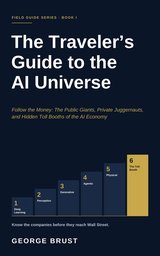
OpenEvidence has won America's doctors. The open questions are whether it can hold them against a free OpenAI product, and why it wants to be a drug company too.From the author of this briefThis brief covers one company. OpenEvidence sits in AI in Healthcare — the AI stack in action. The Traveler's Guide to the AI Universe, Book I maps the whole AI economy around it, in plain language.Get Book I →
Olympus Services view
OpenEvidence is software built on licensed data. Its app and website answer clinical questions with citations to the underlying research, drawing on licensed content from NEJM, JAMA, NCCN, Wiley, the American College of Physicians and Memorial Sloan Kettering's OncoKB cancer-gene database. Around the search sit DeepConsult (longer research answers), Visits (visit notes), Learn (medical education) and Access Intelligence (drug cost and coverage). It runs its own medical models and buys its computing. [S21][S10][S27][S16][S11][S28]
| Customer | Product delivered | What they concretely get |
|---|---|---|
| Verified U.S. clinicians (free) | OpenEvidence app and web, DeepConsult, Visits, Learn, Access Intelligence | Cited answers at the point of care, visit notes, education, and the steps to get a drug covered [S16][S11][S29] |
| Pharma and device advertisers (pay) | Advertising beside answers | Reach to U.S. clinicians at the moment of a treatment decision [S22][S6] |
| Health systems (pay) | Enterprise version inside Epic | Single sign-on, access for all staff, answers that can draw on the patient's chart [S30][S31][S32] |
| Medical publishers and societies | Licensing agreements | Their guidance delivered to clinicians inside OpenEvidence [S21][S10] |
| Low- and middle-income countries (free) | Version adapted with Anthropic | Free access in about 100 countries [S33][S34] |
| AI chain layer | OpenEvidence's role |
|---|---|
| Chips & hardware | No role |
| Compute & cloud | No role; buys computing, including through Anthropic [S23] |
| Energy & power | No role |
| Data | Its own: licensed medical journals, guidelines and databases [S21][S10][S27] |
| Foundation models | Its own: medical models [S28] |
| Developer tools & infrastructure software | No role |
| Applications | Its own: the clinician app [S16] |
| Physical AI | No role |
Doctors pay nothing. Drug and device companies pay to place advertising beside answers, reaching clinicians as they decide on treatment; this is most of the revenue. Health systems pay for the version built into Epic; contract terms are not disclosed. Sacra estimates advertising sells at $70-150 or more per thousand views (estimate). [S22][S6][S30][S31][S35]
| Item | Figure | Basis |
|---|---|---|
| 2025 revenue | More than $100M | Company [S22][S36] |
| Annualized revenue, end-2025 | ~$150M | Sacra estimate [S37] |
| Annualized revenue, Jul 2026 | ~$300M | The Information, reported [S24][S25] |
| 2026 advertising revenue | $400-500M, on track | Source to the FT, reported [S6][S7] |
| Cash flow | About breakeven | Reported [S25][S38] |
| Health system | What was announced | Date |
|---|---|---|
| Sutter Health | Integration into Epic workflows | 11 Feb 2026 [S30][S39] |
| Mount Sinai | Enterprise-wide in Epic across seven hospitals | 31 Mar-2 Apr 2026 [S31][S40] |
| Cedars-Sinai | Deployment | 20 May 2026 [S41][S40] |
| Penn Medicine | Available to more than 10,000 clinicians across seven hospitals | 15 Sep 2026 [S23][S17] |
| Memorial Sloan Kettering | In MSK's Epic; OncoKB inside OpenEvidence | 16 Sep 2026 [S21][S17] |
| Northwestern Medicine | In Epic with single sign-on | 12 Oct 2026 [S32][S42] |
| Johns Hopkins Medicine | Collaboration on care and medical education | 13 Oct 2026 [S20] |
| Other systems | UTMB (Sep), AdventHealth (Oct), NYU Langone (29 Oct) | [S17][S8] |
| Measure | Figure | Source |
|---|---|---|
| Verified U.S. clinicians | 1.12M (Sep 2026) | Company [S23][S4] |
| Share of U.S. physicians | Nearly two-thirds (Oct 2026) | Company, via FT [S6][S7] |
| Prompts | More than 42M a month (Oct 2026), up from ~20M (Jan 2026) | Company [S6][S43] |
| Busiest day | 1 million consultations in a single day (10 Mar 2026) | Company [S44] |
| Independent study | ~952,000 clinicians, incl. 556,200 physicians, sent 271M queries, Jan 2024-Jun 2026 | JAMA study [S4][S5] |
| Round | Date | Amount | Lead | Valuation |
|---|---|---|---|---|
| Series A | Feb 2025 | $75M | Sequoia | $1B [S45][S46] |
| Series B | Jul 2025 | $210M | GV, Kleiner Perkins | $3.5B [S45][S36] |
| Series C | Oct 2025 | $200M | GV | $6B [S36][S47] |
| Series D | Jan 2026 | $250M | Thrive, DST Global | $12B [S48][S22] |
| Unnamed round | Sep 2026 | $250M | Byers Capital, Andreessen Horowitz; hospital systems | $15B [S26][S21][S49] |
In total OpenEvidence has raised about $1 billion. [S47][S26] The September round came in below the $20 billion the company reportedly discussed in July; The Information said that larger raise was unlikely, partly because of dilution. [S24] At $15 billion, the valuation is about 50 times July's annualized revenue (Olympus calculation).
In July The Information reported past acquisition talks with a large technology company. In September Business Insider reported the founders were fielding acquisition interest and could prefer a sale to an IPO. The company has not confirmed either report. [S24][S50][S51]
In September Nadler told Forbes that OpenEvidence will use data from Memorial Sloan Kettering and NCCN to build its own pipeline of cancer treatments, starting with rare cancers, with a first candidate in clinical trials targeted before the end of 2026 and three to five more in 2027. [S21][S52] As of 17 November no candidate had been named and no trial had been registered or started. [S53]
Drug development is slow, costly and fails most of the time. It would also put OpenEvidence in competition with the drug companies that pay for its advertising. Funding, partners and timing for the program have not been disclosed.
| Competitor | Position | Relation to OpenEvidence |
|---|---|---|
| OpenAI ChatGPT for Clinicians | Free for verified U.S. physicians, NPs, PAs and pharmacists since 22 Apr 2026 [S54][S55] | Most serious threat |
| Doximity | Largest U.S. physician network; Doximity GPT; public company [S1] | Rival in ads and AI; lawsuits settled Oct 2026 |
| UpToDate (Wolters Kluwer) | Paid clinical reference with AI features [S37] | Incumbent in hospitals |
| Epic | Record system with its own AI [S56] | Partner today; controls the workflow |
| Anthropic | Model supplier and partner [S33] | Partner, not rival |
| Level | Risk | Assessment (November 2026) |
|---|---|---|
| HIGH | Free competition | OpenAI offers the same clinicians a free tool. [S54] |
| HIGH | Drug development | New, costly, high-failure business that competes with its advertisers. [S21] |
| MEDIUM | Advertising dependence | Most revenue comes from drug and device advertising. [S22][S6] |
| MEDIUM | Europe | Withdrew from the EU and UK in late April 2026, citing regulatory uncertainty including the EU AI Act. [S18][S19] |
| MEDIUM | Valuation | About 50 times July's annualized revenue; needs continued fast growth. |
| MEDIUM | Regulation and liability | Deeper use in patient care, and now a consumer study, raise regulatory and liability exposure. |
| LOW | Funding | Reportedly at cash-flow breakeven; strong investor demand. [S25][S26] |
| Layer | OpenEvidence today | Read-through |
|---|---|---|
| Path to liquidity | No IPO filing; acquisition interest reported [S50] | A sale could come before any IPO |
| Valuation anchor | $15B (Sep 2026) [S26] | Below the $20B discussed in July [S24] |
| Investor composition | Sequoia, GV, Kleiner Perkins, Thrive, DST, Byers, a16z, hospital systems [S45][S48][S26] | Hospital investors are also customers |
| Founder control | Nadler (CEO) and Ziegler lead; ownership not disclosed | Founders' views will shape sale versus IPO |
These are the developments most likely to change our view. They are not forecasts.
| Client question | Educational answer |
|---|---|
| "Can I invest in OpenEvidence?" | Not publicly. There is no IPO filing, and reports say a sale is possible. Accredited investors may find access through private funds or secondary platforms. |
| "How does a free app make money?" | Drug and device companies pay to advertise to doctors, and hospitals pay to build it into their record systems. |
| "Why is it worth $15 billion?" | Revenue was about $300 million a year in July and is reportedly on track for $400-500 million of advertising in 2026, and the company is reportedly breakeven. $15 billion is about 50 times July's run rate. |
| "Is Apple buying it?" | No. Apple is running a research study with an app built on OpenEvidence's technology. Nothing more has been announced. |
| "Why is it making drugs?" | The CEO says its data can find cancer treatments big drug companies overlook. No candidate has been named yet; it is early, costly and risky. |
Private company; no scheduled earnings reports.
Disclosures. Educational research, not investment advice; Olympus gives no buy or sell ratings or price targets. Conviction is on a I–V scale (I–II Low, III Medium, IV–V High). Olympus uses AI research tools, including Anthropic's Claude, to help gather and check sources; the analysis and rating are George Brust's. OpenEvidence is a private company that does not publish audited financial statements; revenue figures in this report are press reports or third-party estimates, and reports of acquisition interest are unconfirmed. Its shares are not publicly traded.
Cite this brief: George Brust, “OpenEvidence Intelligence Brief,” Olympus Services, updated 17 November 2026. https://olympusservices.net/briefs/open-evidence/ — Free to quote with a link to this page.
More in Healthcare AI
Each number is tagged to a numbered source — SEC filings, company releases and tier-one press — not recycled headlines.
What the company actually delivers, where it sits in its value chain, who pays — and what is not disclosed.
Where this company sits against incumbents and challengers — moats, risks, and the bear case stated plainly.
A decision-grade PDF you can put in front of an investment committee, client, or board.