After Nvidia's ~$20B licence deal, Groq is an AI inference cloud on Nvidia hardware: $3.5B in August, now seeking a Series B at $8B (reported). DOJ probe and Delaware suit pending. Updated Nov 17, 2026. 9 pages.
The AI economy is the economy.
The full Groq brief is free. Enter your name and email and we'll send your PDF in minutes.
No spam. Unsubscribe anytime.
By George Brust, President & CEO, Olympus Services · Updated 17 November 2026
The Groq brief below is the full Olympus research text, with every figure tagged to a numbered source. A formatted PDF of the same brief is free by email.
The main change since 14 October: Groq's chairman has asked investors for a new round at $8 billion before new money, more than twice the August price, while publicly traded AI cloud stocks fell. [S1][S2]
| Date | Event | Why it matters |
|---|---|---|
| ~3–4 Oct | Former engineers Benjamin Serebrin and Joshua Rubin sue Groq's former board, Jonathan Ross and Sunny Madra in Delaware [S3][S4] | Litigation over how the Nvidia money was shared |
| 6 Nov | Executive chairman Alex Davis seeks a Series B at an $8B pre-money valuation; Groq declined to comment (Bloomberg, reported) [S1][S2] | About 2.5x the August pre-money of $3.15B |
| This week | Nvidia quarterly results | May show whether the deferred $4B licence fee has been paid |
Scenarios: October showed bear, base and bull values for the new Groq. Olympus no longer publishes scenario values; they are removed. Investor multiples: October showed paper multiples for each funding round at the $20B headline. The headline combines a $17B licence fee and about $3B of Nvidia stock paid to staff, and how the money was shared is now in court, so the multiples are removed. [S4][S3] Capacity: October gave 54 MW of capacity today; another report gives 57 MW. Until Groq publishes a single figure, this edition gives only its target of 200 MW by the end of 2027. [S5][S6] Developers: this edition uses the 5 million+ figure in Groq's June release. [S5]
Groq was founded in 2016 by Jonathan Ross, one of the original designers of Google's TPU chip. Its language processing unit (LPU) ran AI models faster than graphics chips. In December 2025 Nvidia licensed the technology on a non-exclusive basis and hired Ross, president Sunny Madra and much of the team, in a deal reported at about $20 billion. Groq stayed independent and kept GroqCloud. [S7][S8][S9]
Under new management (CEO Adam Winter, executive chairman Alex Davis of Disruptive) Groq raised $650 million in June and $350 million in August, the second at $3.5 billion, about half its September 2025 valuation. It runs 13 data centers and is filling them with Nvidia's newest systems, including the Groq 3 LPX built from its own former technology. [S5][S10][S11][S12]
The new Groq has data centers, more than 5 million developers and backers willing to fund growth, and it is asking investors to more than double its value. But it now rents out Nvidia hardware in a crowded, price-sensitive market, publishes no revenue, and legal questions about the Nvidia deal hang over its old shareholders and board. [S5][S1][S13][S3]
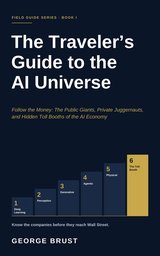
The Groq that investors backed is now inside Nvidia. What is left is a cloud company that sells Nvidia's chips by the token.From the author of this briefThis brief covers one company. Groq sits in Stage 6, The Toll Booth Layer — where the money lives. The Traveler's Guide to the AI Universe, Book I maps the whole AI economy around it, in plain language.Get Book I →
Olympus Services view
Groq today sells computing, not chips. GroqCloud runs AI models for customers (inference): developers call an API that works like OpenAI's and pay per token, and larger customers rent dedicated or bare-metal capacity. Its hardware now comes from Nvidia, including Groq 3 LPX racks of 256 accelerators and Vera Rubin NVL72 systems, deployed with Dell. [S5][S6][S12][S14]
| Customer | Product delivered | What they concretely get |
|---|---|---|
| Developers (5M+) | GroqCloud API [S5] | Fast responses from open-weight models, paid per token; little code change to switch from OpenAI's API [S15][S16] |
| AI-native companies (thousands) | Dedicated and bare-metal GroqCloud capacity [S5][S6] | Reserved low-latency computing on short- and medium-term contracts [S17] |
| Nvidia (Dec 2025) | Non-exclusive licence [S7][S8] | Rights to Groq's inference technology, now sold by Nvidia as the Groq 3 LPX [S18][S14] |
| Layer | Groq's role |
|---|---|
| Chips | None now: technology licensed to Nvidia; Groq buys Nvidia systems [S18][S12] |
| Compute & cloud | Core: GroqCloud, 13 data centers in North America, Europe, the Middle East and Asia-Pacific [S5] |
| Data | None |
| Foundation models | Hosts other companies' open-weight models; does not train its own [S15] |
| Developer tools | API and GroqStack infrastructure tools [S6] |
| Applications | Built by its customers |
| Item | Detail |
|---|---|
| Who pays | Developers and AI companies using GroqCloud [S5]; Nvidia paid the licence fee [S19] |
| What they pay for | Model responses (tokens) through the API; reserved computing capacity |
| How they are charged | Per million tokens on the API; contracts for dedicated or bare-metal capacity [S6][S15] |
| Revenue | Not disclosed. In his Series B pitch the chairman projected an eightfold rise in revenue in 2027 and $2B of EBITDA by 2028 (company projection, reported) [S1][S17] |
| Licence money | $13B paid by Nvidia at closing and $4B due within a year (Nvidia filing) [S19][S16] |
| Component | Amount | Basis |
|---|---|---|
| Licence fee paid at closing (Dec 2025) | $13B | Nvidia filing [S19][S16] |
| Licence fee deferred, due within a year | $4B | Nvidia filing; not reported as paid as of mid-November [S16] |
| Nvidia stock for engineers who moved | ~$3B | Reported [S4] |
| Headline total | ~$20B | Widely reported [S8][S4] |
Because Nvidia licensed the technology instead of buying the company, there was no formal merger review, and the money went to Groq, which then paid shareholders. The deferred $4 billion and the treatment of different shareholder classes are at the center of the Delaware suit. [S19][S3]
| Round | Date | Amount | Lead | Valuation |
|---|---|---|---|---|
| Series D-3 | Sep 2025 | $750M | Disruptive | $6.9B post-money [S20] |
| Nvidia licence | Dec 2025 | ~$20B | Nvidia | Licence and hiring, not a purchase of Groq [S7] |
| Growth round | Jun 2026 | $650M | Disruptive, Infinitum | Not disclosed [S5] |
| Series A | Aug 2026 | $350M | Disruptive | $3.15B pre / $3.5B post [S11][S1] |
| Series B (sought) | Nov 2026 | Not disclosed | Approached by chairman | $8B pre-money asked (reported) [S1][S2] |
The same investors lead every round since the Nvidia deal: Disruptive, the firm run by Groq's executive chairman Alex Davis, and the hedge fund Infinitum. Nvidia said it planned to join the August round. [S5][S6][S2]
| Matter | Status (November 2026) |
|---|---|
| Justice Department | Investigating whether Nvidia structured the licence to avoid antitrust review; sent Nvidia a formal request for information (New York Times via Reuters, Sep 2026). A fine is possible; unwinding the deal is considered unlikely. [S13][S21] |
| Delaware suit | Former engineers Benjamin Serebrin and Joshua Rubin sued the former board, Ross and Madra, alleging shareholders were shortchanged and denied a vote. [S3][S4][S22] |
| Senators | Elizabeth Warren and Richard Blumenthal questioned whether the deal evaded merger rules. [S23] |
| Competitor | Position | Versus the new Groq |
|---|---|---|
| CoreWeave, Nebius, Lambda | Large GPU clouds | Far more capacity; same Nvidia hardware. Nebius was first to adopt the Groq 3 LPX [S18] |
| Cerebras | Independent fast-inference chips and cloud | Leading non-Nvidia alternative [S16] |
| Together AI, Fireworks AI | Inference platforms for developers | Direct competitors for developers [S16] |
| AWS, Azure, Google Cloud | Hyperscale clouds | Price and scale leaders [S16] |
| Level | Risk | Assessment (November 2026) |
|---|---|---|
| HIGH | Commodity competition | Many clouds rent the same Nvidia hardware, including the Groq 3 LPX; prices per token keep falling [S18] |
| HIGH | Capital needs | Growing to 200 MW needs large, ongoing spending; the Series B ask comes as AI cloud stocks fall [S5][S1] |
| MEDIUM | Legal overhang | Justice Department probe and Delaware suit [S13][S3] |
| MEDIUM | Dependence on Nvidia | Supplier, partner and planned investor [S6][S12] |
| MEDIUM | Disclosure | No revenue or margin figures; growth targets come from the chairman's pitch [S1] |
| LOW | Near-term funding | $1B raised since June; committed lead investors [S5][S6] |
| Layer | Groq today | Read-through |
|---|---|---|
| Who captured the gain | Founders, top engineers and early investors through the Nvidia deal [S8][S4] | Insiders exited before any public market |
| Who is challenging it | Former engineers, in Delaware court [S3] | Not all holders feel fairly treated |
| Board control | Disruptive and Infinitum lead the new company [S5][S2] | The same funds sit on both sides of the transition and price each new round |
| Public exposure | Groq's chip technology through Nvidia stock only [S18] | The new Groq has no public path yet |
| Client question | Educational answer |
|---|---|
| "Did Nvidia buy Groq?" | Not legally. It licensed the chip technology and hired most of the team, in a deal reported at about $20B. Groq still exists as a separate company. [S7][S8] |
| "How do I get exposure to Groq's chips?" | Through Nvidia stock. The technology now ships as Nvidia's Groq 3 LPX. [S18] |
| "What is Groq now?" | A private AI cloud running Nvidia hardware, valued at $3.5B in August and seeking $8B before new money (reported). [S11][S1] |
| "What are the legal issues?" | A Justice Department probe of the deal's structure and a Delaware suit by former engineers over how the proceeds were shared. [S13][S3] |
Read our Nvidia brief and our briefs on rival AI clouds such as CoreWeave, Nebius and Lambda, free at olympusservices.net/briefs. For the bigger picture of who wins in AI, see The Traveler's Guide to the AI Universe and The Olympus Field Guide (books on Amazon).
Disclosures. Educational research, not investment advice; Olympus gives no buy or sell ratings or price targets. Conviction is on a I–V scale (I–II Low, III Medium, IV–V High). Olympus uses AI research tools, including Anthropic's Claude, to help gather and check sources; the analysis and rating are George Brust's. Groq is a private company that does not publish audited financial statements; payout figures come from Nvidia's filings and press reports, and the legal matters described are unresolved.
Cite this brief: George Brust, “Groq Intelligence Brief,” Olympus Services, updated 17 November 2026. https://olympusservices.net/briefs/groq/ — Free to quote with a link to this page.
More in AI chips
Each number is tagged to a numbered source — SEC filings, company releases and tier-one press — not recycled headlines.
What the company actually delivers, where it sits in its value chain, who pays — and what is not disclosed.
Where this company sits against incumbents and challengers — moats, risks, and the bear case stated plainly.
A decision-grade PDF you can put in front of an investment committee, client, or board.