Startup banking: ~$1B annualized revenue and 450,000+ customers (Oct 2026), four years GAAP-profitable, $5.2B valuation (May 2026). OCC and FDIC approvals to open Mercury Bank. Updated Oct 29, 2026. 8 pages.
The AI economy is the economy.
The full Mercury brief is free. Enter your name and email and we'll send your PDF in minutes.
No spam. Unsubscribe anytime.
By George Brust, President & CEO, Olympus Services · Updated 29 October 2026
The Mercury brief below is the full Olympus research text, with every figure tagged to a numbered source. A formatted PDF of the same brief is free by email.
| Date | Event |
|---|---|
| 11 Dec 2025 | Mercury Personal opens to everyone [S1][S2] |
| 19 Dec 2025 | Applies for a national bank charter and FDIC deposit insurance [S3][S4] |
| 5 Feb 2026 | Annual letter: 300,000+ customers, $248B 2025 payment volume [S2][S5] |
| 2 Apr 2026 | Acquires Central, an AI payroll and benefits company [S6][S7] |
| 24–27 Apr 2026 | OCC conditional approval for Mercury Bank, N.A. [S8][S9] |
| 20–21 May 2026 | $200M Series D at $5.2B, led by TCV [S7][S10][S11] |
| Jun 2026 | Mercury Command AI assistant rolls out [S12][S13] |
| Sep 2026 | FDIC approves deposit insurance for Mercury Bank, N.A. [S14][S15] |
| Oct 2026 | ~$1B annualized revenue and 450,000+ customers; Mercury Payroll launches [S16][S17][S18] |
The May edition named the co-founder as 'Maxwell Taggart'; Mercury's co-founders are Max Tagher and Jason Zhang, with CEO Immad Akhund. It said Mercury took in $2 billion of deposits in five days after SVB failed and kept 95%; Fortune reported over $2 billion in the weeks after, with no retention figure. Its $20 billion deposit figure, employee count and 'ten consecutive quarters' claim could not be confirmed and are removed. The Evolve partner-bank transition it listed as a risk was completed in 2025. Its valuation targets ('$5B target', '$8–10B plausible') and its claim to use SEC filings are removed; Mercury files no financial statements with the SEC.
Mercury, based in San Francisco, provides bank accounts, cards, treasury, bill pay and now payroll to startups and small businesses. It was founded in 2017 by Immad Akhund, Jason Zhang and Max Tagher. About one in three U.S. startups use it. [S2][S19][S20]
It raised $200 million at a $5.2 billion valuation in May 2026, led by TCV — up 49% from its March 2025 round. It has raised about $700 million in total. [S7][S10][S11][S21]
In October 2026 the CEO said Mercury had passed $1 billion in annualized revenue and 450,000 customers, up from $650 million in September 2025. It has been profitable on both GAAP net income and EBITDA for four consecutive years. [S16][S17][S22][S7]
Mercury holds conditional approvals from the OCC (April 2026) and the FDIC (September 2026) to open Mercury Bank, N.A. Until it opens, customer deposits sit at partner banks Choice Financial Group and Column N.A. [S8][S9][S14][S15][S23]
Rated IV (High). Mercury combines rapid growth with four straight years of profit, a loyal customer base and a clear path to becoming a bank itself. It is not rated V because much of its revenue comes from interest on customer deposits, which falls when rates fall; the bank still needs $300 million of capital, Federal Reserve approval for its holding company and an opening within the OCC's deadline; and its customers are concentrated among venture-backed startups.
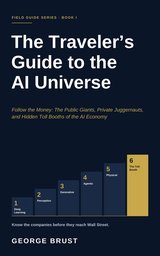
The startup bank is about to become a bank.From the author of this briefThis brief covers one company. Mercury sits in Fintech — the AI layer rebuilding money. The Traveler's Guide to the AI Universe, Book I maps the whole AI economy around it, in plain language.Get Book I →
Olympus Services view
| Date | Round | Detail | Basis |
|---|---|---|---|
| 25–26 Mar 2025 | Series C | $300M at $3.5B; Sequoia led; Spark and Marathon new; Coatue, CRV, a16z returning | [S21][S20] |
| 20–21 May 2026 | Series D | $200M at $5.2B (reported); TCV led; a16z, Coatue, CRV, Sapphire, Sequoia, Spark | [S7][S10][S24] |
| Total | — | ~$700M raised, primary and secondary (company figure) | [S7][S24] |
Mercury has not filed for an IPO or set a timeline; the CEO has said it expects to go public 'in the future.' No price targets or scenario values are given in this brief. [S25][S22]
| Measure | Figure (company-reported) | Basis |
|---|---|---|
| Annualized revenue | ~$500M (end-2024) → $650M (Sep 2025) → ~$1B (Oct 2026) | [S21][S22][S16][S17] |
| Customers | 300,000+ (Feb 2026, +50% in 2025) → 450,000+ (Oct 2026) | [S2][S16][S17] |
| Payment volume | $248B in 2025, up 59% from $156B in 2024 | [S2][S5] |
| Profitability | Four consecutive years, GAAP net income and EBITDA | [S7][S9] |
| Demand | Q1 2026 applications 2.5× a year earlier | [S7][S9] |
Mercury computes annualized revenue as monthly revenue times twelve; it is not subscription ARR. 73% of 2025's new customers came from outside AI and tech startups, including ecommerce. [S22][S2]
Mercury does not take equity in the businesses that bank with it. Its CEO describes these revenue streams [S26][S27]:
Because deposit revenue depends on interest rates, falling rates reduce it. Mercury does not publish how its revenue splits across these streams. [S26][S27]
| Date | Step | Detail | Basis |
|---|---|---|---|
| 19 Dec 2025 | Applications filed | OCC national charter and FDIC deposit insurance; holding company to apply to the Federal Reserve; Jon Auxier (ex-CFO, SoFi Bank) named proposed bank CEO | [S3][S4] |
| 24 Apr 2026 | OCC conditional approval | Mercury Bank, N.A., Salt Lake City, online-only | [S8][S9] |
| Sep 2026 | FDIC approval | Deposit insurance for Mercury Bank, N.A. | [S14][S15] |
The OCC's conditions include at least $300 million of initial capital and a Tier 1 leverage ratio of at least 10% for three years. The approval lapses if the capital is not raised within 12 months or the bank does not open within 18 months — roughly April and October 2027. Federal Reserve approval of the holding company has not yet been reported, and the bank is not yet open. [S8][S9][S14][S3]
| Company | Latest | Basis |
|---|---|---|
| Ramp | Corporate cards and spend; ~$60B valuation (Oct 2026, reported) | [S31] |
| Brex | Acquired (see the Olympus Brex exit record) | [S31] |
| Level | Risk | What to know |
|---|---|---|
| HIGH | Interest-rate exposure | Revenue shared from interest on customer deposits falls when rates fall [S26][S27] |
| HIGH | Charter execution | $300M of capital and an opening required by ~Oct 2027; Fed approval pending [S8][S9] |
| MEDIUM | Customer concentration | Core base is venture-backed startups, though 73% of 2025 new customers came from elsewhere [S2] |
| MEDIUM | Competition | Ramp and others compete for cards and spend management [S31] |
| LOW | Partner banks | Deposits sit at partner banks until Mercury Bank opens [S3][S23] |
| Timing | Event | Why it matters |
|---|---|---|
| By ~Apr 2027 | $300M capital raise for the bank | Required to keep the OCC approval [S8] |
| Any time | Federal Reserve approval | Last regulatory step before opening [S3] |
| By ~Oct 2027 | Mercury Bank opens | Lets Mercury hold deposits itself [S8] |
| 1 Jan 2027 | First payroll runs | First test of the payroll product [S18] |
Disclosures. Educational research, not investment advice; Olympus gives no buy or sell ratings or price targets. Conviction is on a I–V scale (I–II Low, III Medium, IV–V High). Olympus uses AI research tools, including Anthropic's Claude, to help gather and check sources; the analysis and rating are George Brust's. Mercury is a private company; figures come from company announcements, filings, court records and press reports as cited, are reported rather than audited, and may change.
Cite this brief: George Brust, “Mercury Intelligence Brief,” Olympus Services, updated 29 October 2026. https://olympusservices.net/briefs/mercury/ — Free to quote with a link to this page.
More in Fintech & markets
Each number is tagged to a numbered source — SEC filings, company releases and tier-one press — not recycled headlines.
What the company actually delivers, where it sits in its value chain, who pays — and what is not disclosed.
Where this company sits against incumbents and challengers — moats, risks, and the bear case stated plainly.
A decision-grade PDF you can put in front of an investment committee, client, or board.